
Forest Succession: How a Forest Builds Itself Over Time.
Forest succession is generally the ecological process that describes how a forest establishes, develops, and matures after disturbance. Whether the land has been cleared, burned, or simply left open, plant communities do not appear randomly. They arrive in a sequence. Each group basically prepares the way for the next, gradually building soil, structure, and biodiversity.
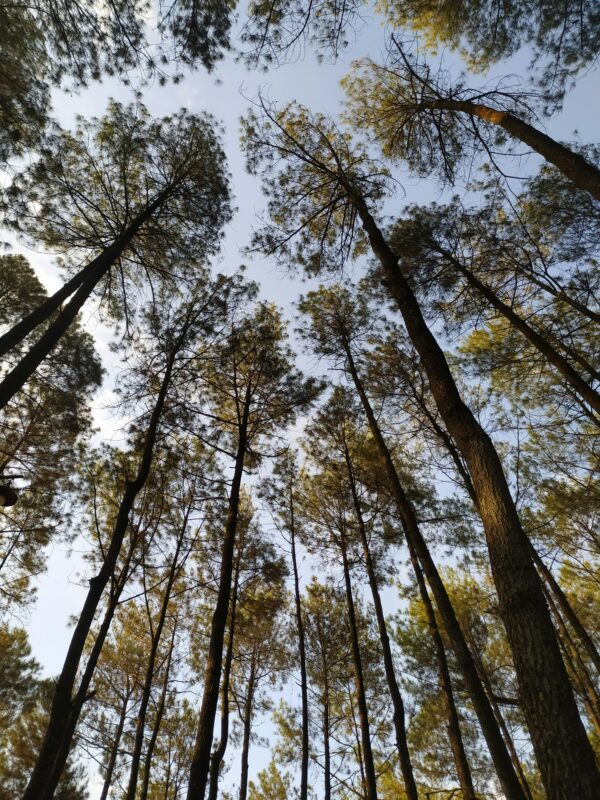
Secondary Forest Succession.
In most landscapes across New York and New England, we are observing secondary succession. This means the soil is already present, but the plant community has been reset. What follows is a progression from sun-loving pioneer species to shade-tolerant, long-lived forest trees. This process is not just theoretical. It is visible on every abandoned field, roadside edge, and unmanaged property.
Pioneer Plants.
The first stage of forest succession is obviously dominated by pioneer plants. These are species that move in quickly, tolerate harsh conditions, and grow fast in full sun. Early succession trees like Pine and Poplar or Aspen are classic examples. They establish rapidly in poor soils and begin improving conditions by adding organic matter through leaf litter.
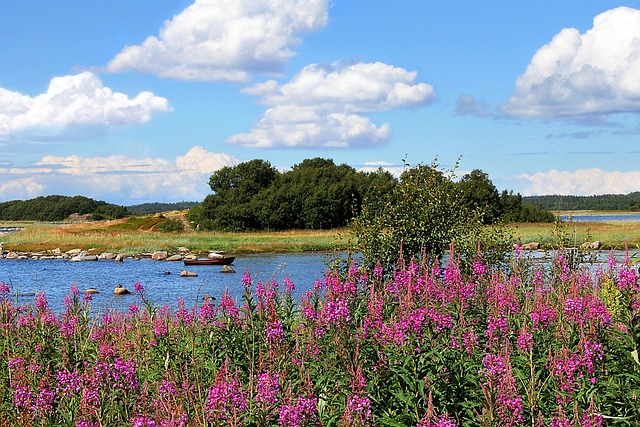
High Germination Rates.
At the same time, pioneer perennials fill the ground layer. These plants are typically short-lived, but they reseed aggressively and spread quickly. Columbine (Aquilegia canadensis) and Rudbeckia triloba are excellent examples. They stabilize soil and reduce erosion straightaway. Additionally, the pioneers displace invasive species. Their role is temporary but essential. They are the first responders of a regenerating ecosystem.
Bioremediation.
As these early species grow and die, they improve the soil and create partial shade. This opens the door for the next stage of forest succession. Mid-succession species begin to establish under these changing conditions. Trees like Oak and Maple enter the system, growing more slowly but ultimately living much longer. These species are better adapted to moderate shade and richer soils.
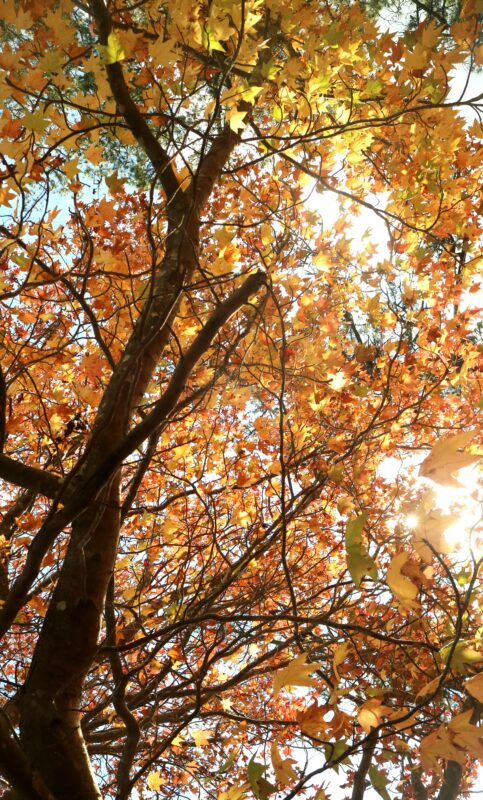
The Understory.
The perennial layer shifts as well. Long-lived perennials begin to replace the short-lived pioneers. Species like Baptisia and Silphium laciniata invest in deep root systems and structural stability. They do not rely on constant reseeding. Instead, they persist for decades, anchoring the plant community and supporting a more stable ecosystem. This transition marks a critical turning point, where the landscape begins to move from rapid colonization toward long-term balance.
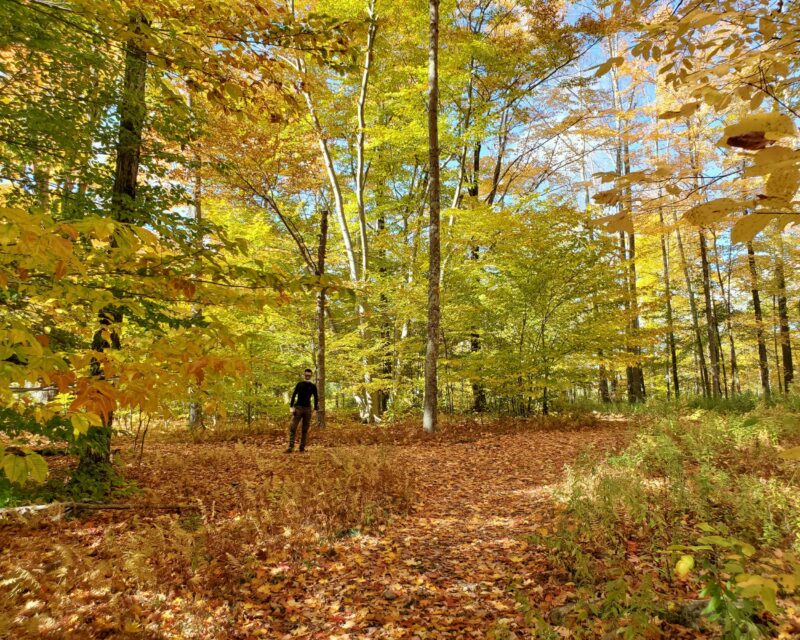
Climax Forest Succession.
Eventually, forest succession reaches what is known as the climax stage. In this phase, the forest becomes dominated by highly shade-tolerant species such as Hemlock and Beech. These trees are capable of regenerating beneath their own canopy, creating a self-sustaining system. Light becomes limited, growth slows, and the ecosystem stabilizes. Nutrient cycling becomes efficient, and biodiversity reaches a high level of complexity.
Understanding forest succession changes how we approach landscape design. A newly installed garden behaves like early succession. It requires species that can establish quickly, handle exposure, and compete effectively. Over time, as plants grow and conditions shift, the design must account for increasing shade, root competition, and long-term structure.
This is why plant selection matters so deeply. Pioneer perennials like Columbine and Rudbeckia triloba surely serve an immediate function, filling space and protecting soil. Long-lived perennials like Baptisia and Silphium laciniata provide the backbone of a mature planting. Both are necessary, but they operate on different timelines. Ignoring this can certainly lead to failure. Working with it leads to landscapes that evolve, rather than languish.
At Jessecology, all in all, we design with forest succession in mind. The team approaches every project as a living system that will change over time. We are not just installing plants. We are setting a trajectory. When done correctly, a landscape becomes more resilient, more beautiful, and more ecologically rich with each passing year. Forest succession is the quiet process behind that transformation. It is the rhythm of land healing itself, one stage at a time.
Start Your Project today and we’ll be in touch soon.
Suggested Products


