
Yellow Dock: What This Weed Is Telling You About Your Soil.
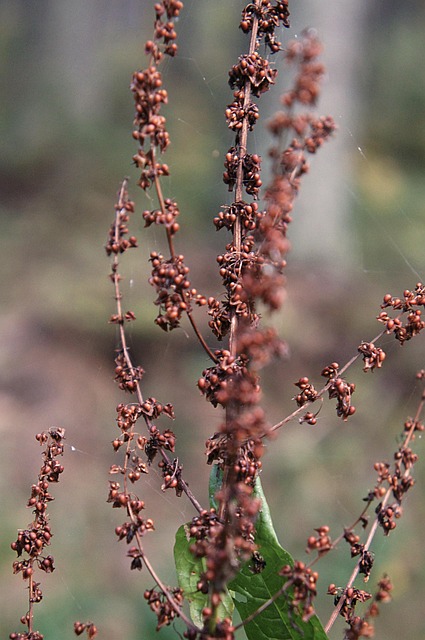
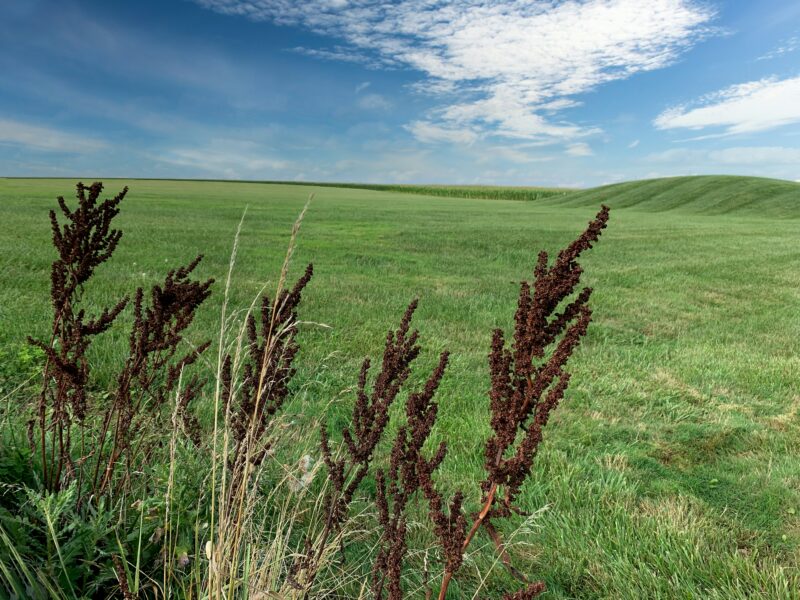
You’ve probably seen Yellow Dock (Rumex crispus) without knowing it. It grows in disturbed ground, along roadsides, and at the edges of fields — those tall rusty-brown seed stalks that stand long after everything else has died back. It arrived from Europe and western Asia and has since spread across most of North America.
Is Rumex crispus Invasive?
Yellow dock is not currently rated as invasive in most of Canada, though that status is worth watching. In some U.S. states and in New Zealand and Australia, it already holds that designation.
Yellow Dock as a Soil Indicator.
When Rumex crispus shows up in your landscape, it’s worth paying attention. It tends to colonize heavy clay soils and compacted, disturbed ground. Its deep taproot actually helps break up that compaction over time, pulling trace minerals up from deeper layers.
Here’s the interesting part: Yellow Dock accumulates and concentrates minerals from the soil, giving a high profile of calcium, magnesium, zinc, copper, and manganese. Its presence often signals soil that is mineral-rich but structurally degraded — compacted, low in organic matter, and frequently low in nitrogen. Think of it as the land asking for help.
Traditional Herbal Uses — and Reasons for Caution.
Herbalists have long used Rumex crispus root for digestion, liver support, and iron-deficiency anemia. Yellow dock roots are particularly effective at extracting iron from the soil and converting it into a bioavailable form. Some herbalists also recommend it for women dealing with heavy periods, PMS, and hormonal imbalance, citing its iron content and liver-supporting properties.
This author recommends caution. There is no clinical evidence to support specific dosage recommendations for Rumex crispus, and extra caution is warranted because of its oxalate and tannin content. It should also be avoided during pregnancy.
Did First Nations People Eat Yellow Dock?
Rumex crispus is an introduced species, so it was not part of Indigenous diets before European contact. However, First Nations tribes use the plant to treat digestive ailments, skin conditions, and swellings — knowledge that developed after it naturalized here. As for the seeds: the seeds of yellow dock, once dried thoroughly, are edible, and the resulting flour is much like buckwheat in flavor. Many foragers today grind them into a gluten-free flour, though the seeds have a mild laxative effect in larger quantities.
Yellow dock is a useful plant to know. It reads your soil, supports your compost pile with minerals, and has a genuine (if overhyped) herbal history. Leave it, observe it, or harvest it carefully, but don’t blindly hate it for no reason.
Certainly, the Jessecology team is ready to replace your Rumex weeds with NY native wildflowers! Start Your Project today and we’ll be in touch soon.
Suggested Products


