
The Grue Jay.
Reports from Texas birding communities have sparked excitement and debate. Observers recently documented what appears to be a rare Blue Jay × Green Jay hybrid, called the Grue Jay. Certainly, this is an unexpected combination of two visually distinct corvids. While hybridization occurs in birds, such pairings remain uncommon, especially between species with historically separated ranges.
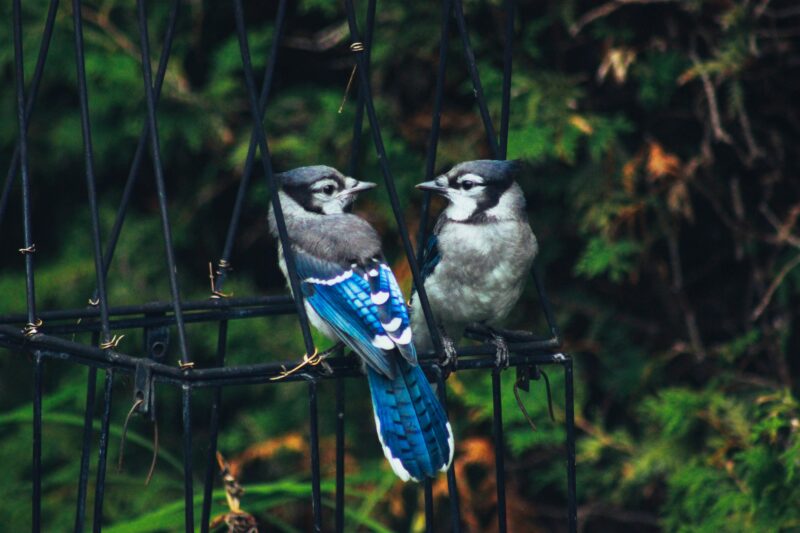
Traditionally, Blue Jays occupy more northward and eastward territories across the United States. In contrast, Green Jays concentrate in southern Texas, Mexico, and Central America, favoring warmer climates and subtropical habitats. However, shifting environmental conditions may be altering those long-established boundaries. As temperatures warm and ecosystems change, birds increasingly explore new regions in search of food, nesting sites, and suitable microclimates.
The Grue Jay expresses that political boundaries exist outside of nature.
Consequently, overlapping territories create opportunities for interactions that once seemed unlikely. When closely related species share habitat, courtship behaviors occasionally cross species lines. In this case, birders suggest that range expansion or localized displacement may have brought Blue Jays and Green Jays into closer contact. Although researchers have not yet confirmed the hybrid genetically, photographs and field notes indicate blended traits.
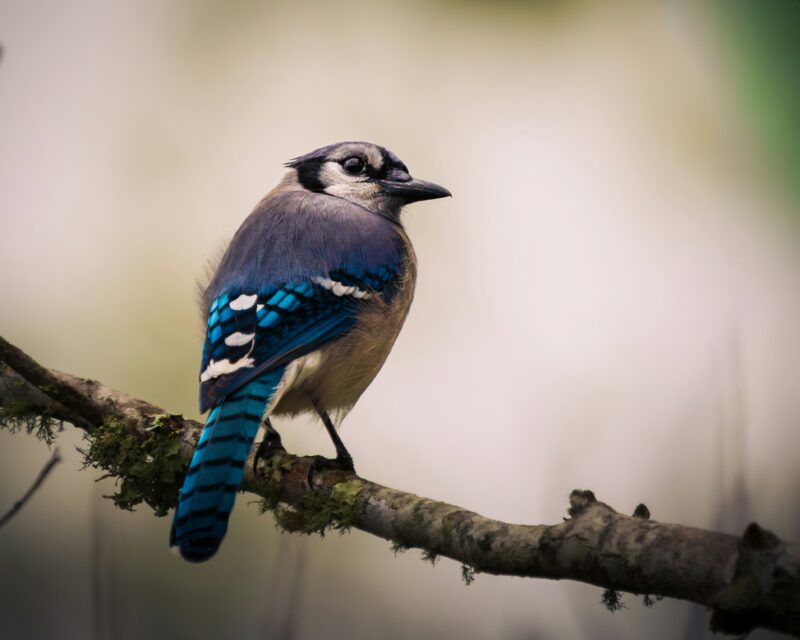
Notably, hybrids often display intermediate coloration, mixed vocalizations, or subtle structural differences. Birdwatchers described this individual as showing a combination of Blue Jay patterning and Green Jay tonal influences. Moreover, the sighting highlights how dynamic avian distributions can be. Species ranges are not static maps; instead, they respond continuously to climate, land use, and resource availability.
Nevertheless, caution remains essential. Misidentification, lighting effects, or unusual plumage variations sometimes mimic hybrid characteristics. Therefore, ornithologists emphasize the need for careful documentation, multiple observations, and, when possible, DNA analysis.
Regardless of final classification, the discussion underscores a broader reality. Birds are adjusting to a rapidly changing world. Each credible report contributes valuable data, helping scientists understand migration shifts, adaptation strategies, and emerging ecological patterns. In that sense, even a debated hybrid becomes part of an important and evolving scientific story.
Obviously, Jessecology can design + plant a NYS bird garden for you!
Suggested Products


