
Commercial Native Landscaping: Build It Right Once, Maintain It Less Forever.
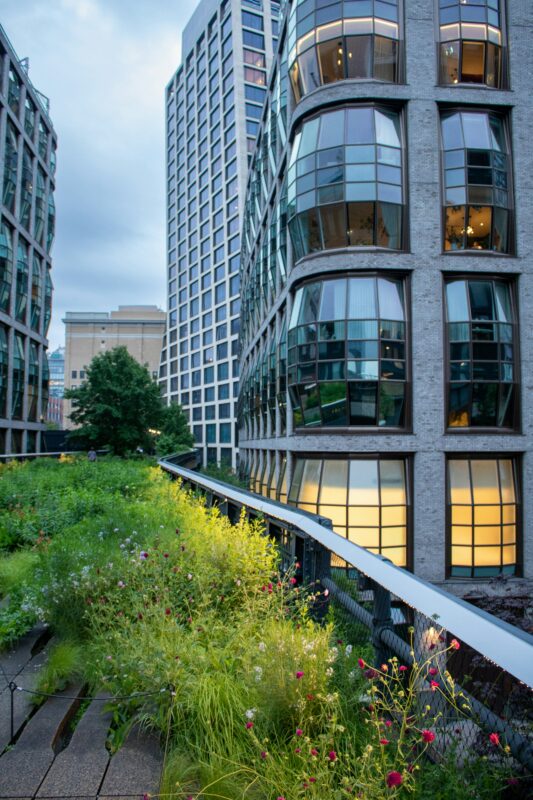
Commercial landscapes do not need to be high maintenance to be beautiful. In fact, the opposite is often true. When commercial sites invest a little more intention, planning, and quality during construction, they save dramatically on maintenance costs for decades to come. This is where commercial native landscaping basically shines.

Traditional commercial landscapes are often designed for speed and short term appearance. Thin lawns, shallow mulch beds, and ornamental plants selected for looks (and price) alone create systems that depend on constant mowing, pruning, irrigation, fertilizer, and replacement. These landscapes are expensive to maintain and quick to decline.
Native plant systems are built differently.

Construction Is the Moment That Matters Most with Commercial Native Landscaping.
Low maintenance landscapes are not accidental. They are constructed deliberately. Proper soil preparation, dense planting, correct plant selection, and ecological layout cost more upfront than quick install landscaping. However, that investment pays for itself many times over.
When native plants are installed at appropriate densities and matched correctly to sun, moisture, and soil conditions, they quickly form living plant communities. These communities shade the soil, suppress weeds, retain moisture, and stabilize temperature extremes. The result is a landscape that largely takes care of itself once established.
Maintenance shifts from constant intervention to light seasonal stewardship.
Why Commercial Sites Are Ideal for Native Landscaping.
Public access properties may benefit more than almost any other land type from native landscaping. Large footprints, open exposure, and repetitive maintenance schedules make conventional landscaping especially costly. Native systems reduce mowing, irrigation, fertilizer use, and labor hours across wide areas.
They also perform real work. Native landscapes manage stormwater, reduce runoff, cool surrounding pavement, and improve soil health over time. These functions are not aesthetic extras. They are infrastructure.
For campuses, office parks, medical facilities, schools, and industrial sites, this translates into long term savings and operational resilience.
People Want to Be There.
There is another benefit that rarely shows up on a spreadsheet but matters deeply. People feel better in ecologically rich landscapes.
Native plantings soften hard commercial spaces. They introduce movement, flowers, birds, and seasonal change. Employees take breaks outside. Visitors linger. Tenants feel pride in their surroundings. Studies consistently show improved mood, reduced stress, and higher satisfaction when people spend time in naturalized environments.
A landscape that feels alive changes how a place is experienced.
Native landscapes cool the local climate by shading soil, reducing heat reflection, and supporting evapotranspiration. In large commercial areas dominated by asphalt and buildings, this cooling effect is substantial.
The Climate Cooling and Habitat Creation Potential of Commercial Native Landscaping.
They also create habitat. Pollinators, songbirds, and beneficial insects return. Public sites can become part of a larger ecological network instead of ecological dead zones.
Commercial Native Landscaping is A Smarter Long Term Investment.
Commercial native landscaping is not about doing less. Rather it is about doing it right the first time. Higher quality construction leads directly to lower maintenance, stronger performance, and landscapes that improve with age instead of declining.
When designed and installed properly, native commercial landscapes become assets that people enjoy, ecosystems depend on, and budgets appreciate year after year.
Start Your Commercial Native Landscaping Project with Jessecology today!
Suggested Products


