
Fiddleheads: Welcoming Spring in the Forest.
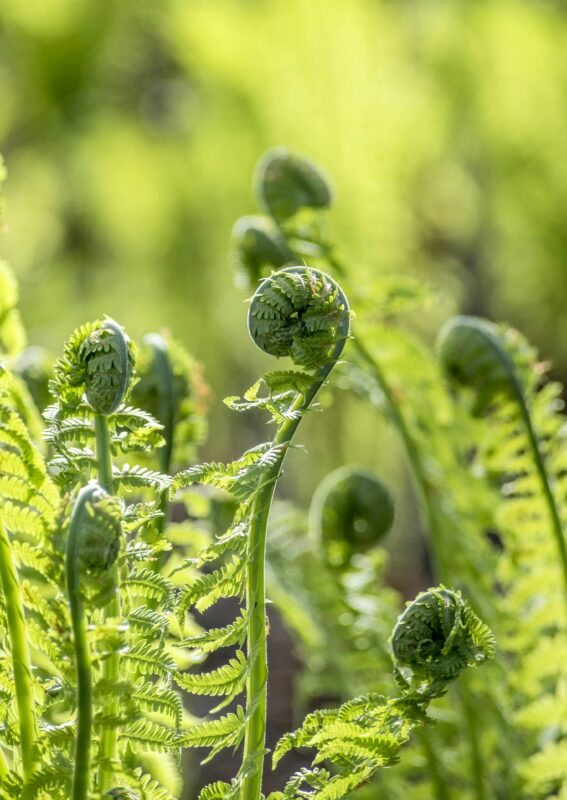
Fiddleheads: Every spring, before the trees leaf out, the forest floor wakes up in slow motion. Ferns—ancient plants that have been on Earth for over 300 million years—begin their season by sending up tightly coiled baby fronds called fiddleheads. These little spirals unfurl into full-grown fronds as the days warm, and their structure is both delicate and precise.
1. Anatomy of Fiddleheads
Each fiddlehead is a young fern frond still curled in on itself. The central stalk, or rachis, is wrapped in papery brown scales or fine hairs, depending on the species. Inside that coil is a complete leaf, folded like origami. When sunlight and temperature align, the coil elongates and the frond unfurls—an elegant gesture repeated across millions of years of evolution.
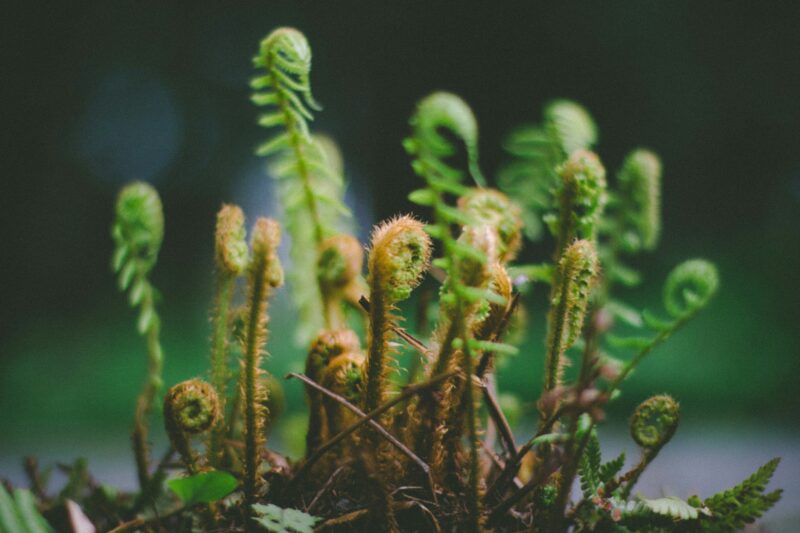
2. The Edible Fiddlehead
Not all fiddleheads are edible, but the most famous and safest is from the Ostrich Fern (Matteuccia struthiopteris). Its bright green coils are smooth, with a deep U-shaped groove along the stem and a papery brown sheath that easily rubs off. These fiddleheads are foraged for food across the Northeast. Certainly, in Maine and Canada, where they’re considered a spring delicacy. They are lightly sautéed with butter or olive oil, or blanched and added to salads.
Caution is advised if considering consuming other fern species. The Bracken Fern (Pteridium aquilinum) or Lady Fern (Athyrium filix-femina) have been eaten in some cultures, but caution is advised. Many ferns contain toxins or carcinogenic compounds that make them unsafe for regular consumption. For home foragers, it’s best to stick with Ostrich Fern only.
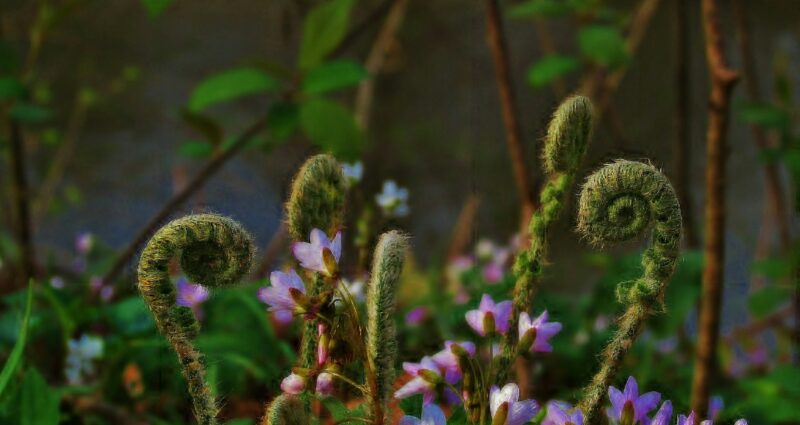
3. The Forest when it’s Fiddleheads Season.
There’s certainly a charm to the forest when all the ferns are just waking up. The ground seems alive with tiny emerald spirals, like a thousand sleeping animals slowly stretching toward the sun. In those early weeks of April and May, before the canopy fills in, the light glows golden through bare branches, and the forest feels like a secret studio—everything quietly in motion, painting itself green again.
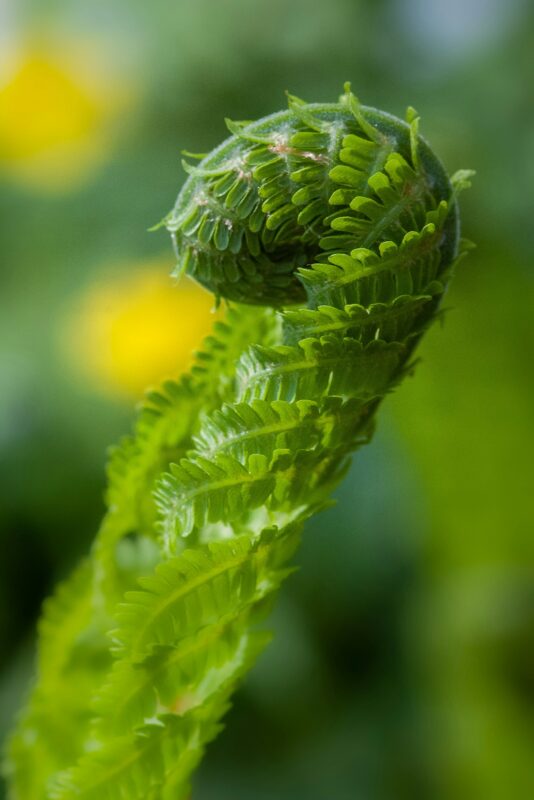
For landscapers and natural gardeners, this moment reminds us why native plants matter. Every fern, generally from Ostrich to Cinnamon to Sensitive Fern, holds deep ecological roles. Ferns certainly stabilize the soil, shelter amphibians, and anchor the woodland understory. Watching them unfurl never gets old.
Start Your Natural Garden Project with Jessecology today and we’ll be in touch soon.
Suggested Products


