 Butterfly Garden Kit
  Monarch Butterfly Seed Mix per oz.
  Wildflowers Deer Do Eat Seed Mix. per lb
 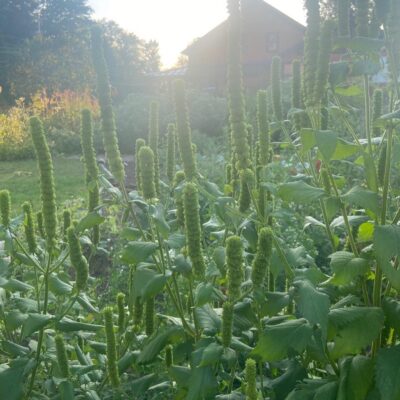 Giant Yellow Hyssop (Agastache nepetoides ). per oz
  Joe Pye (Eupatorium maculatum). per oz
  Native Shrub
  Butterfly Garden Starter Kit.
Bigleaf Aster: A Resilient Native for Shade, Soil, and Subtle Beauty.
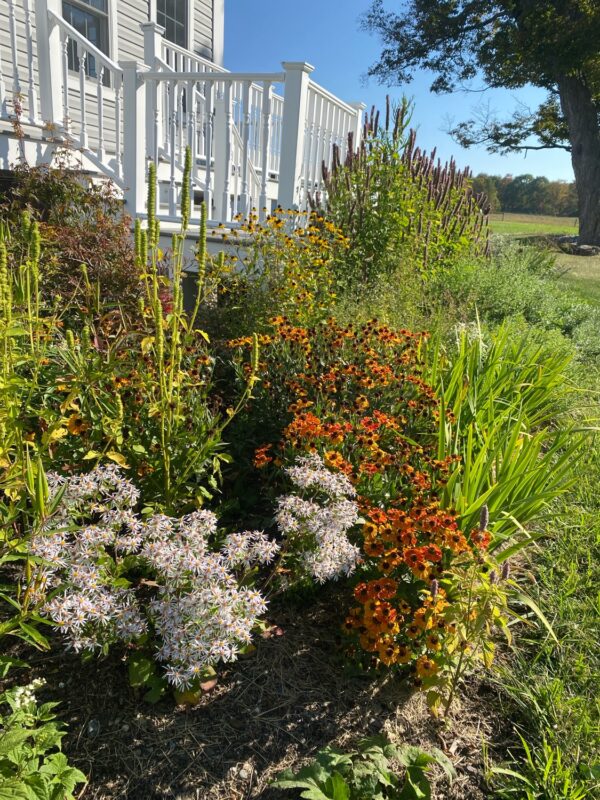
Bigleaf Aster (Eurybia macrophylla) is one of the quiet workhorses of the native plant world. Often overlooked in favor of flashier fall bloomers, this species earns its place through durability, ecological value, and its role as one of the earliest-blooming asters of the season. For gardeners seeking a dependable native that performs beautifully in shade and difficult soils, Bigleaf Aster is an exceptional choice.
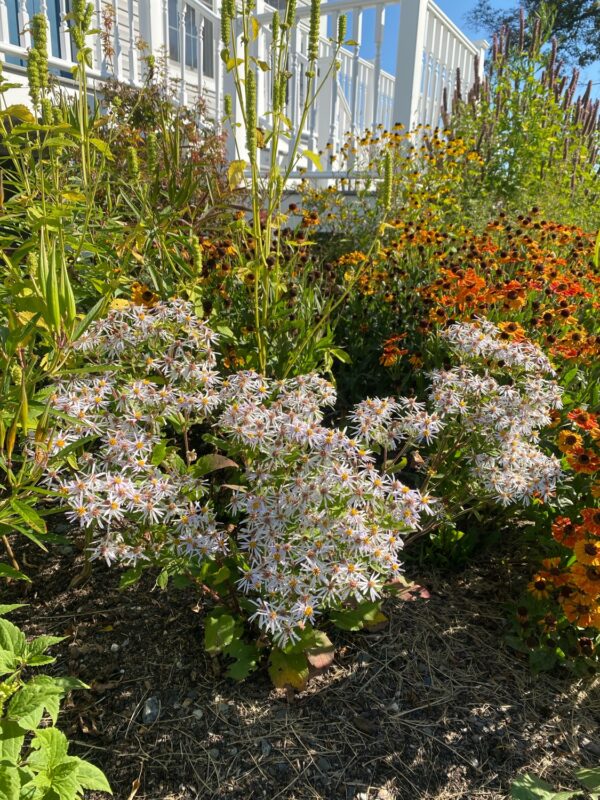
Those big, heart-shaped leaves.
Native to northeastern woodlands, Bigleaf Aster is easily recognized by its large, heart-shaped basal leaves that emerge early in spring and form a dense, living groundcover. These broad leaves help suppress weeds and stabilize soil long before flowering begins. By mid to late summer, soft lavender to pale blue blooms rise above the foliage, offering an early nectar source for native bees and other beneficial insects.
Adaptation + Flexibility.
One of Bigleaf Aster’s most valuable traits is its adaptability. It thrives in part shade to light sun and tolerates dry soils once established, making it ideal for woodland edges, slopes, and transitional spaces. Gardeners often note that deer and rabbits tend to leave it alone, adding to its reliability in landscapes with browsing pressure.
Bigleaf Aster Habit
Bigleaf Aster truly excels along edges and borders. Its compact height and tidy, upright habit make it a natural fit along paths. Additionally, it’s a great choice for those soft landings under trees. Without a doubt it belongs at the front of woodland beds. Unlike taller or floppier asters, it holds its shape well. The Eurybia habit creates a soft, finished edge, even in more formal garden settings. Basically, this acts as a graceful bridge between structured spaces and naturalized plantings.
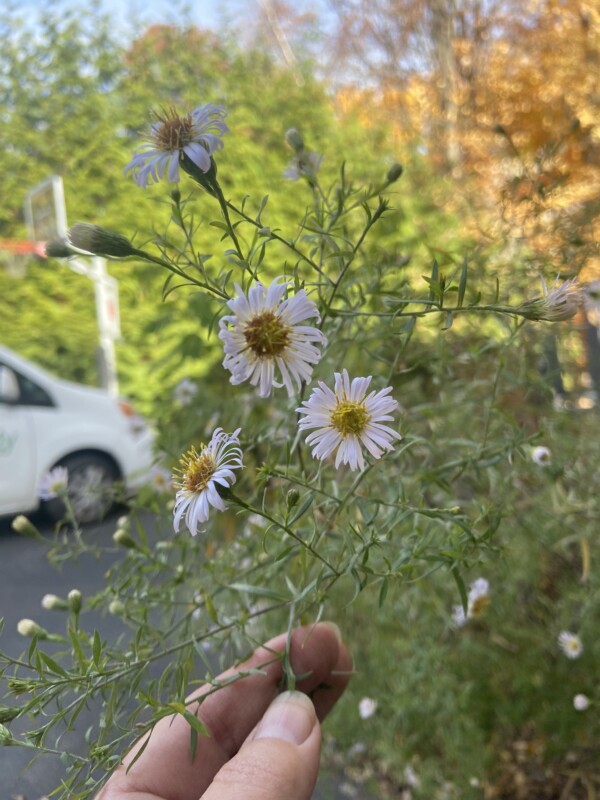
A Series of Aster Blooms.
In the seasonal sequence of Asters, Bigleaf blooms early, followed by Heath Aster (Symphyotrichum ericoides). Frost Aster (Symphyotrichum pilosum) of course closes out the season. In the garden, Bigleaf Aster pairs beautifully with ferns, sedges, woodland grasses, and spring ephemerals. Its spreading habit is gentle rather than aggressive. Certainly this makes it an excellent choice for naturalistic designs, shaded borders, and low-maintenance landscapes. Obviously quiet beauty and ecological value matter most in such spaces.
Suggested Products


