
Catalpa Trees
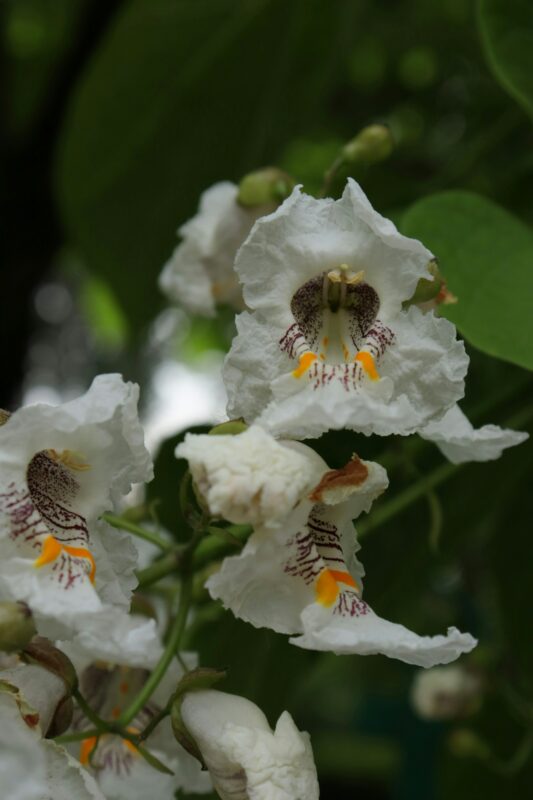
Catalpa Trees are native to the United States but are not native to New York State. Historically, their natural range was centered in the Midwest and Southeast, with Northern Catalpa (Catalpa speciosa) occurring primarily in river floodplains and disturbed alluvial soils. Despite this, Catalpa Trees have been widely planted for over a century as ornamental and shade trees and are now naturalized across much of the Northeast, including New York.
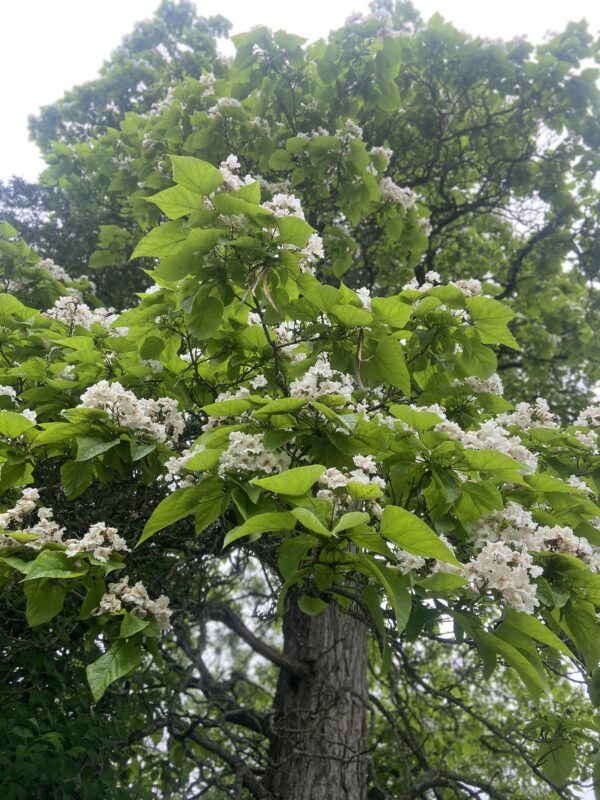
A Rare Naturalized Species
This puts Catalpa Trees in an interesting ecological category: not locally native, but not invasive, and increasingly functionally integrated into contemporary ecosystems. Some ecologists would refer to this unicorn status as “naturalized.”
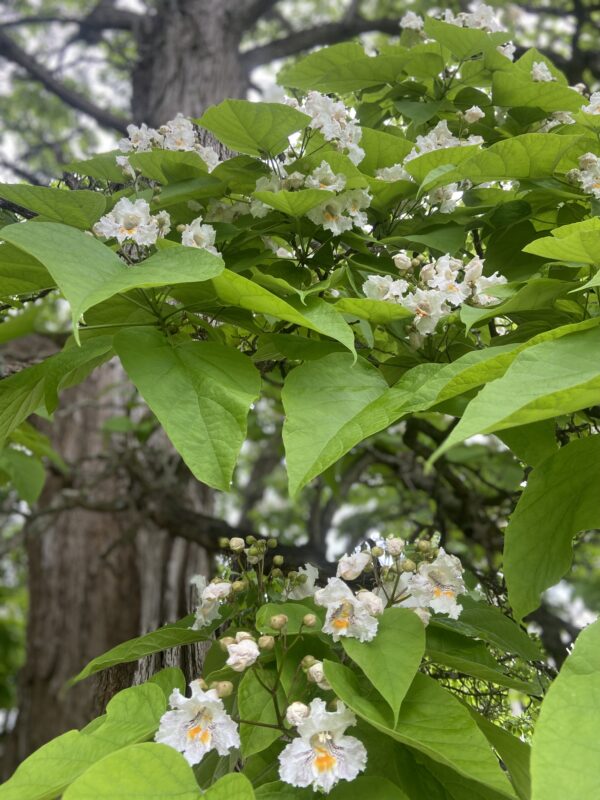
Catalpa trees and the Vacated Ecological Niche.
Over the last 100–150 years, New York’s landscape has lost a significant number of mature, broad-canopied native trees due to logging, agriculture, suburban development, and disease. Species such as American Chestnut, American Elm, and large, open-grown hardwoods once played a major role in creating:
• Large leaves and dense summer shade.
-Heavy seasonal leaf litter inputs.
• Robust insect biomass tied to soft-tissue foliage.
-Structural habitat for birds and invertebrates.
As these canopy giants declined or disappeared, gaps formed in both physical structure and seasonal energy flow. In many disturbed or semi-urban settings, Catalpa Trees have begun to partially occupy this vacated niche.
Their oversized leaves, fast growth rate, and tolerance of compacted or altered soils allow them to function as a surrogate canopy tree in places where slower-growing native species struggle to establish.
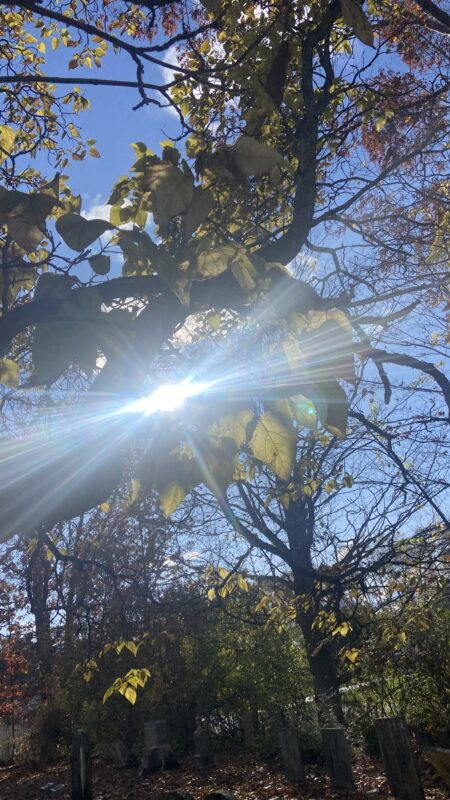
Taxonomic and Ecological Context.
Catalpa belongs to the family Bignoniaceae, a group largely associated with warm-climate flowering trees and vines. From a taxonomic standpoint, Catalpa Trees are evolutionarily distinct from most Northeastern hardwoods, which means they do not support the same breadth of specialist insects as true regional natives.
However, Catalpa Trees do support some native insect relationships, most notably as the primary host plant for the Catalpa Sphinx Moth.
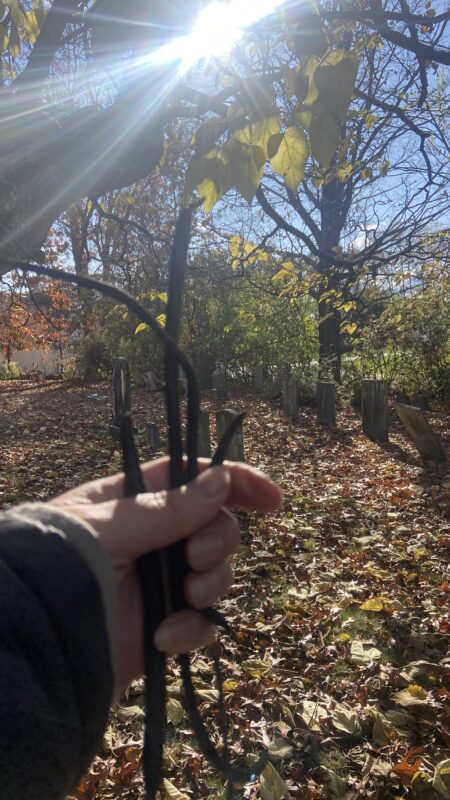
Butterfly and Moth Host Value.
Catalpa Trees are the exclusive larval host for the Catalpa Sphinx Moth (Ceratomia catalpae). The caterpillars, commonly called “Catalpa Worms,” are large, soft-bodied, and seasonally abundant. Their presence contributes to:
• High protein food sources for birds.
-Increased predatory insect activity.
• Seasonal pulses of biomass that move energy up the food chain.
While this is a single specialist relationship rather than a broad suite, it is still ecologically meaningful, especially in landscapes where few large-leaf host plants remain.
Catalpa in New York Landscapes: Ecological Reality.
From an ecological purist perspective, Catalpa Trees are not replacements for regionally native canopy species. They do not replicate the full insect-plant networks that Oaks, Willows, or Maples support.
However, in real, human-altered landscapes, Catalpa Trees often function as:
• A transitional canopy species.
– Structural stand-in where native trees cannot yet succeed.
• A moderate contributor to insect biomass and bird support.
In this sense, Catalpa Trees illustrate an important concept in modern ecology: functional adaptation in a changed world. They are not ideal, but they are participating.
How We View Catalpa at Jessecology.
At Jessecology, we prioritize regionally native Trees whenever possible, especially Keystone species with high wildlife value. Catalpa Trees are not part of our core native palette for New York projects.
That said, we recognize that landscapes exist rather on a spectrum. In legacy sites, older properties, or disturbed soils where Catalpa is already established, removal is not always ecologically justified. In some cases, maintaining an existing Catalpa while restoring native understory, shrubs, and ground layers can result in a net ecological gain.
We Love Native Trees!
Ecology is not basically about purity. It is about function, timing, and long-term trajectory. If you’re considering native trees for your landscape and want to hire a landscaping firm rooted in botany, regional ecology, and honest trade-offs, we can help. Start Your Project with Jessecology today.
Suggested Products


